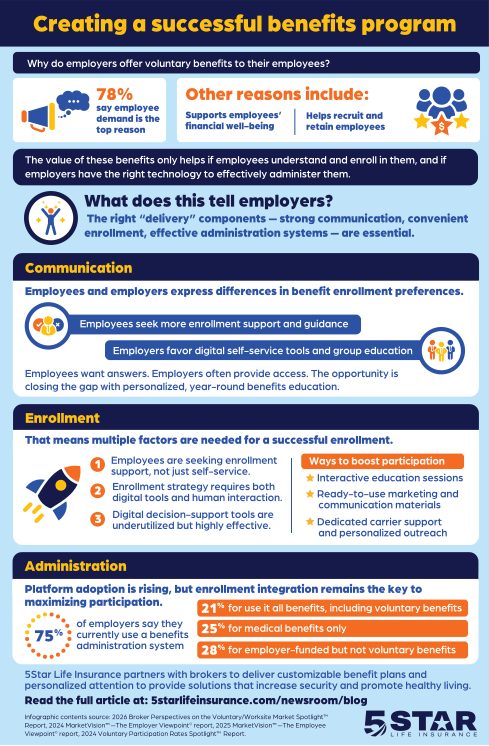
Employers offer voluntary benefits to their employees for many reasons, but a strong majority (78%) list employee demand as the top reason, according to recent research by Eastbridge Consulting Group. Other highly rated reasons include supporting employees’ financial well-being, and helping recruit and retain employees. And voluntary benefits can certainly help meet all those objectives — but only if employees understand and enroll in those benefits, and if employers have the right technology to help them effectively administer them.
In other words, a successful benefits program is more than products and price. The right “delivery” components — strong communication, convenient enrollment, effective administration systems — are essential too.
Communication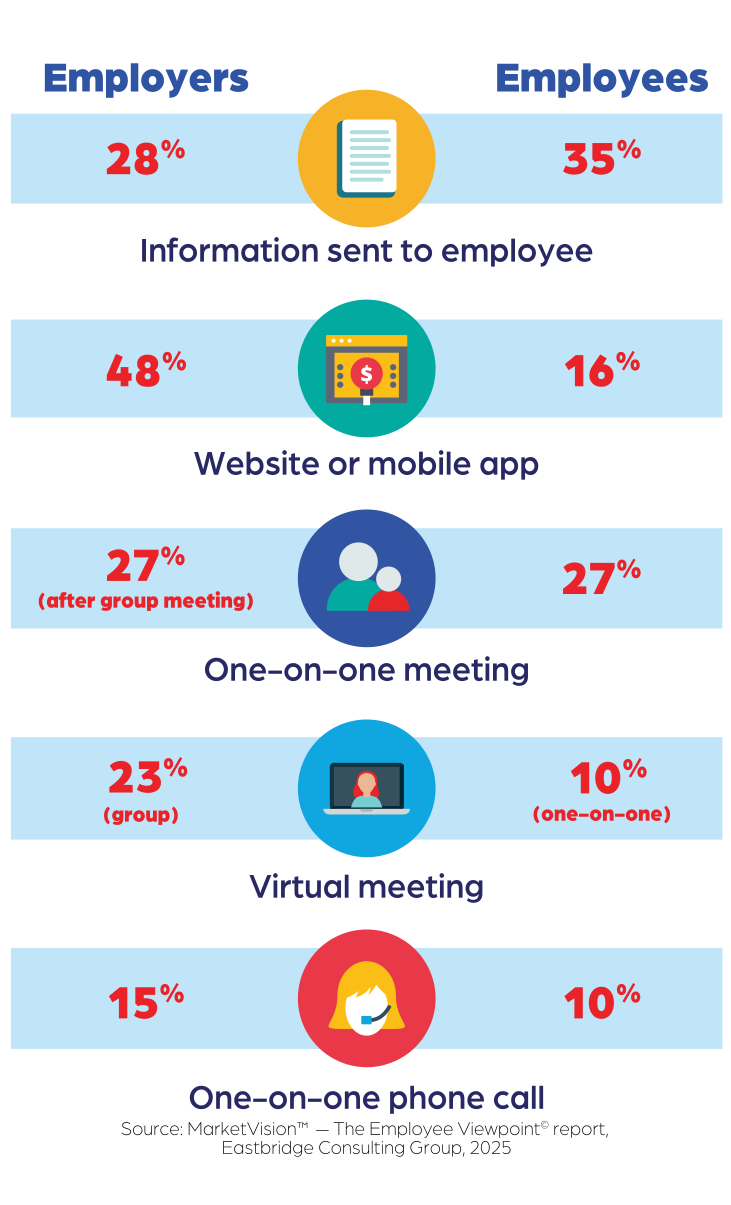
The benefits information employees want and what employers deliver don’t always align, but one message emerges loud and clear from recent research: It’s not enough. A significant majority (70%) of employees would like more benefits education and information from their employer, according to Eastbridge’s 2025 MarketVision™—The Employee Viewpoint© report. Employees surveyed have the strongest preference for learning about voluntary benefits on their own through information sent by their employer (35%), but this number has dropped notably in the past two years, as has the preference for learning on their own online. At the same time, preferences for one-to-one communication — in person, by phone or in a virtual meeting — are up. Employees in smaller firms are especially likely to lean toward personal interaction.
Most employers are open to a wide variety of communication methods, but they tend to differ from employees on their highest preferences. About half of employers (48%) surveyed for a recent MarketVision™—The Employer Viewpoint© report prefer to use a website or mobile app for communication, a method preferred by just 16% of employees. Employers are a bit less likely than employees to prefer sending literature, emails or texts (28%). Employer’s next most-preferred methods are group meetings, either onsite followed by one-on-one meetings (27%) or virtual using videoconference tools (23%), neither of which rank highly with employees. However, some employers do appear to agree with employees that more communication would help: One in five would like year-round decision-support and benefits education technology.
Enrollment
Multiple options to meet employees’ different needs and preferences are essential for a successful voluntary benefits enrollment. The majority of employers (56%) Eastbridge surveyed for the recent Employer Viewpoint© report prefer to use a website or mobile device for their enrollments. However, just as many say they prefer some type of in-person interaction during the enrollment: 38% would like an enroller to complete enrollment forms on a computer alongside the employee, and 20% prefer the help of a human resources representative.
Interest in personal enrollment support is even stronger among employees, according to the Employee Viewpoint© report. More than half of employees (54%) still prefer to enroll on their own, either online or on paper, but this number has dropped significantly from 67% just two years earlier. At the same time, the number who’d like support from a benefits counselor during their enrollment increased from 31% to 41%.
Where employees do value a higher-tech approach is assistance from digital or online enrollment tools, but it’s not a widespread practice. Only 5% of employees who enroll online say they receive this help, but 80% of those who do receive it say it is very helpful or helpful to them.
Research shows brokers may be lagging behind on the apparent shift in enrollment preferences. Most are still defaulting to online self-service, according to Eastbridge’s newest Broker Perspectives on the Voluntary/Worksite Market Spotlight™ report. Nearly two-thirds (64%) of brokers used this enrollment method last year. But the personal touch is still important to many brokers: Half of those surveyed say they enrolled in onsite one-on-one meetings.
A strong majority of brokers agree with employees on the value of user-friendly digital enrollment tools — in fact, 81% say they’re a key to driving stronger participation in the benefits program. Other tactics brokers cite to improve participation include interactive education sessions for employees and human resources teams, ready-to-use marketing and communication materials, access to dedicated carrier account teams or enrollment specialists, and personalized employee outreach.
Administration
Employer use of benefit administration systems has shown tremendous growth in recent years. Eastbridge’s Employer Viewpoint© report shows about three-quarters of employers have a benefit administration system in place, significantly more than the 54% six years earlier. Employee Navigator, ADP Workforce Now, and Workday enrollment platforms lead the list of platforms brokers use most often, according to Eastbridge’s recent broker survey.
However, only 21% of employers overall use their benefit administration system for all benefits including voluntary. One-fourth use it for medical products only and 28% use it for all employer-funded benefits. This approach may not be effective at driving the highest possible participation in their voluntary benefits program, according to Eastbridge’s most recent Voluntary Participation Rates Spotlight™ report. The research shows voluntary participation rates increase when these products are enrolled at the same time and on the same platform as medical, dental and other employer-paid group products. Positioning supplemental health products immediately after medical benefits makes a difference in participation results, too. The mandatory, active enrollment requirements often associated with core benefits, the ability to reach more employees and educate them better, and the opportunity for employees to review all the benefits available to them at the same time combine to help create the best voluntary participation.
A comprehensive product portfolio, competitive pricing and excellent service will always be important factors in creating a strong benefits program. But delivering that package alongside effective benefits communication, enrollment strategies and administration platforms will create greater value for brokers, employers and their employees alike.
Sources: 2026 Broker Perspectives on the Voluntary/Worksite Market Spotlight™ Report, 2024 MarketVision™—The Employer Viewpoint© report, 2025 MarketVision™—The Employee Viewpoint© report, 2024 Voluntary Participation Rates Spotlight™ Report
How employers are expanding their benefits to meet employees’ changing needs
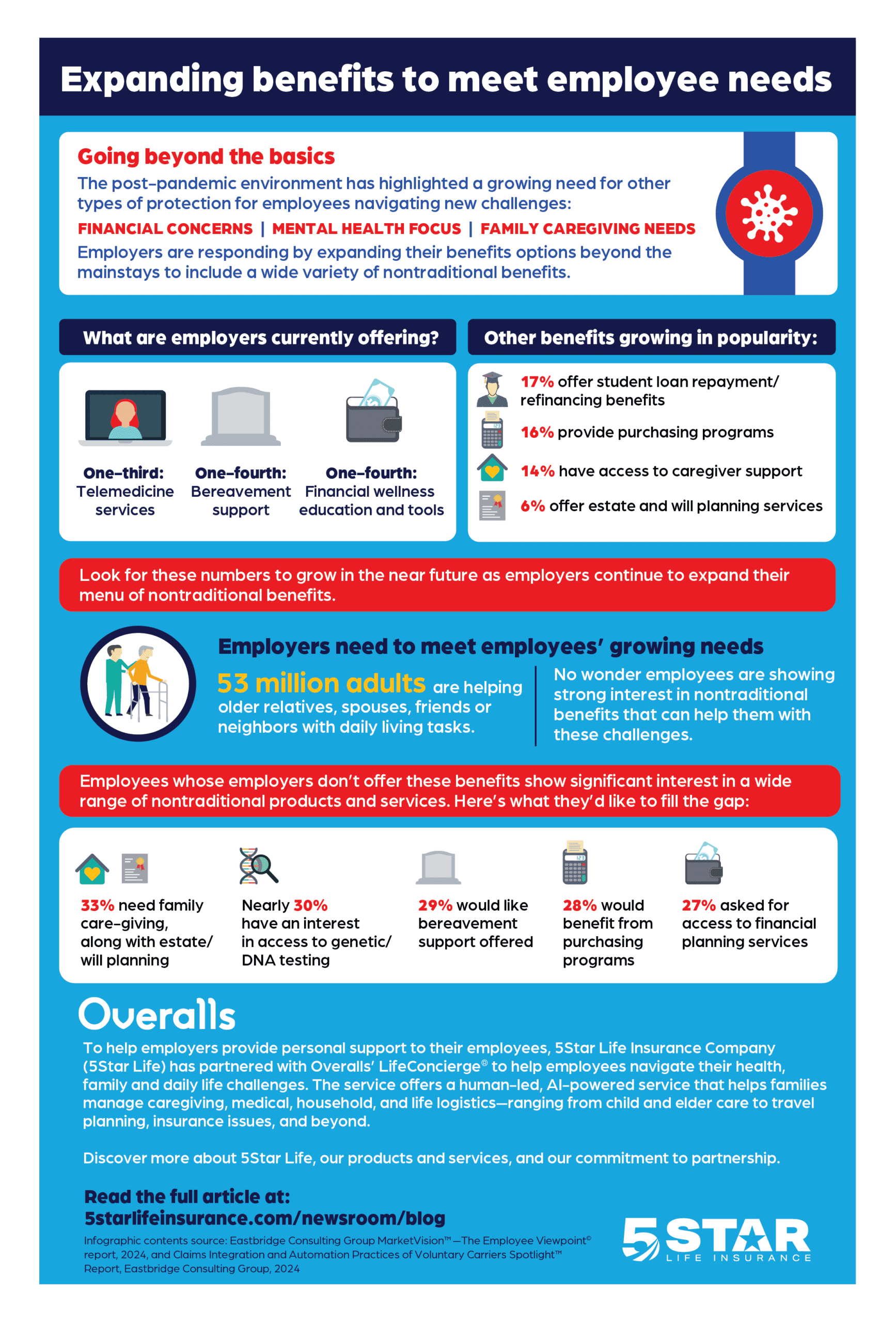
Nearly all employee benefits programs include employees’ most-wanted core benefits: major medical, dental, vision and prescription drug coverage. A majority of employers also offer traditional voluntary benefits that provide additional financial protection, such as life, disability and supplemental health plans. But the post-pandemic environment has highlighted a growing need for other types of protection for employees navigating new challenges, from finances to mental health to family caregiving. A growing number of employers are responding by expanding their benefits options beyond the mainstays to include a wide variety of nontraditional benefits.
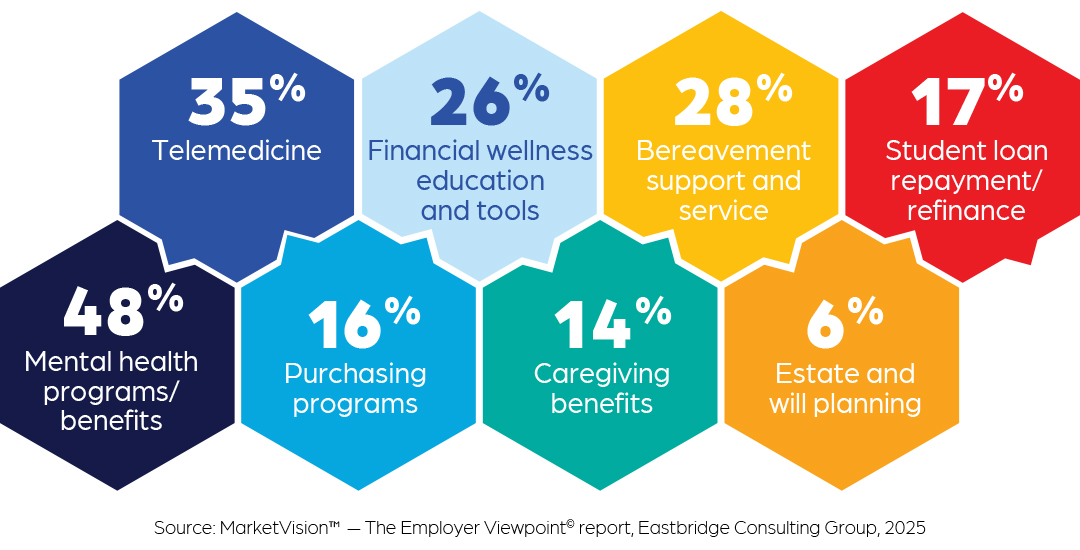
Eastbridge Consulting Group’s recent MarketVisionTM — The Employer Viewpoint© report shows nearly half of employers now offer some type of mental health program or service, up from 34% just three years earlier. More than one-third of employers offer telemedicine, and at least one in four offer bereavement support or financial wellness education and tools. Other types of benefits that help employees manage their money and family responsibilities also are growing in popularity: 17% of employers offer student loan repayment/refinancing benefits, 16% offer purchasing programs, 14% offer access to caregiver support, and 6% offer estate and will planning services.
Look for these numbers to grow in the near future as employers continue to expand their menu of nontraditional benefits. Employers that currently don’t currently offer these products say they’re most likely to add mental health programs, financial wellness education and tools, and caregiving benefits in the next two to three years.
Percent of employers offering nontraditional benefits
Meeting employees’ growing needs
Many employees struggle to meet their family and financial obligations. As our population ages, so do family caregiving responsibilities: SeniorLiving.org reports one in five Americans — 53 million adults — are helping older relatives, spouses, friends or neighbors with daily living tasks. Meanwhile, the vast majority of federal student loan debt is held by people between 25 and 60 years old — their prime working and family raising years — according to TheCollegeInvestor.com.
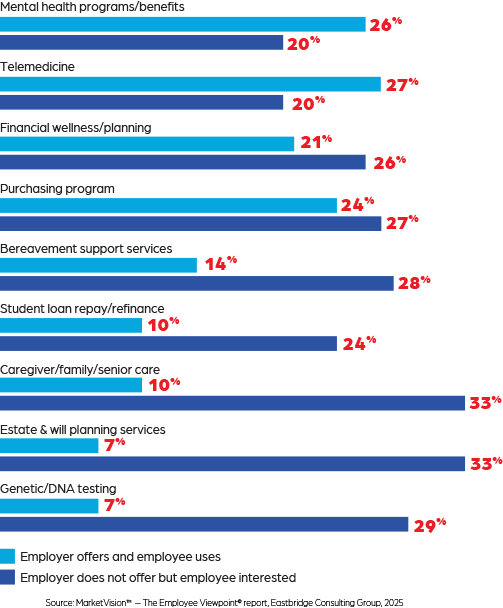
No wonder, then, that many employees show increasingly strong interest in nontraditional benefits that can help them with these challenges. Eastbridge’s most recent MarketVision™ — The Employee Viewpoint© report shows employees with access to these benefits through their employers are most likely to own and use mental health, telemedicine, financial wellness, and purchasing programs.
Employees whose employers don’t offer these benefits show significant interest in a wide range of nontraditional products and services. One-third of employees surveyed say they’re interested in family caregiving and estate and will planning services. Nearly as many report interest in access to genetic/DNA testing services (29%), bereavement support (28%), purchasing programs (27%) and financial planning services (26%).
Employees’ use of and interenst in nontraditional benefits
Providing personal support
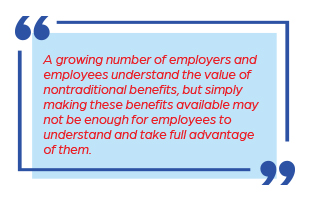
A growing number of employers and employees understand the value of nontraditional benefits, but simply making these benefits available may not be enough for employees to understand and take full advantage of them. Recognizing this gap, 5Star Life has partnered with Overalls’ LifeConcierge® to help employees navigate their health, family and daily life challenges.
LifeConcierge’s human-led, AI-powered service can help families access caregiver support by scheduling child care and elder care, arranging in-home care, filling prescriptions and providing patient advocacy. The service also can find and schedule service providers for a wide range of medical and household needs, from doctors to electricians. Other services include helping employees navigate the bureaucracy of many aspects of daily life, from dealing with denied insurance claims to tracking down lost baggage; helping with planning and logistics for travel, moves and special events; and offering expert advice on insurance needs, contractor pricing and tax rebates.
5Star Life Insurance Company (5Star Life) is dedicated to a collaborative experience with brokers and employers to meet the needs of today’s workforce with benefits solutions and a consumer experience that is second to none. Discover more about 5Star Life, our products and services, and our commitment to partnering with you by visiting us at 5starlifeinsurance.com.